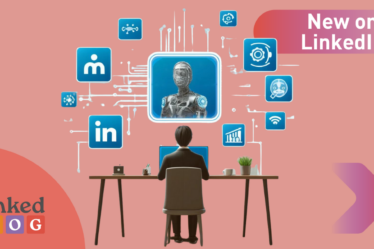
LinkedIn is making a major shift in how it develops early-career product talent. The company is ending its traditional Associate Product Manager (APM) program and replacing it with a new Associate Product Builder track – designed to train hires to code, design, and manage products end-to-end.
What’s changing
Instead of preparing early PMs mainly for coordination and roadmap work, LinkedIn’s new model aims to build people who can take an idea from concept to launch with far fewer handoffs. The logic is tied to a broader internal structure: smaller full-stack builder pods, where teams can “flex across” roles and ship faster without heavy functional silos.
Alongside the structural change, the emphasis also shifts toward what LinkedIn sees as harder to automate: vision, empathy, creativity, communication, and decision-making. The subtext is clear – execution is speeding up, and the bottleneck is increasingly human judgment, not building capacity.
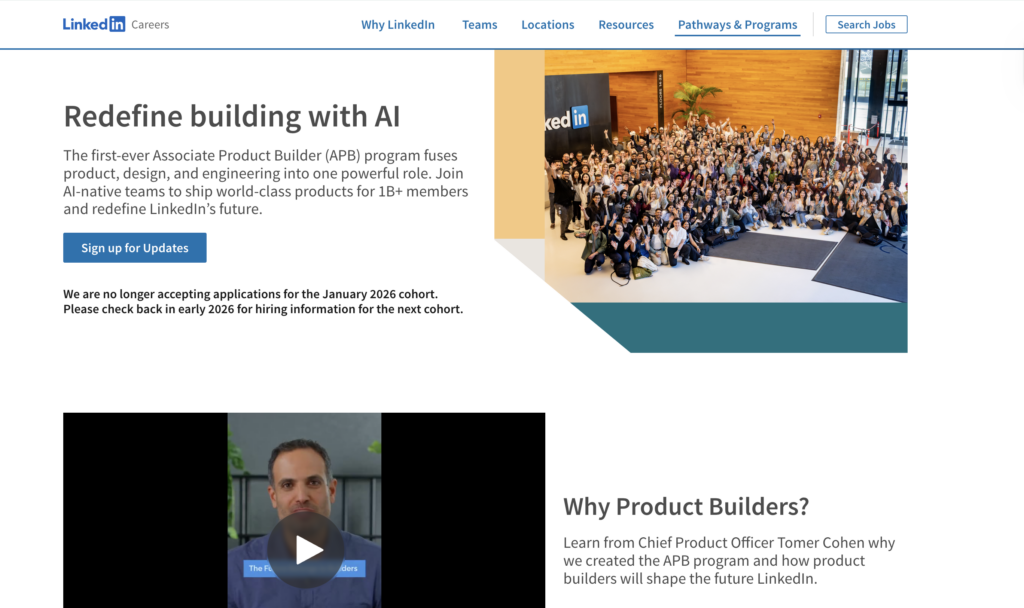
Source: LinkedIn
Why this matters
This isn’t just an internal program redesign – it’s a signal about where product work is heading. As AI compresses development timelines, teams can build prototypes rapidly, but they still need crisp prioritization and fast decisions to move forward. In that environment, a “PM as a coordinator” becomes less valuable than a PM as a builder with strong judgment.
If you’re in product, this shift is worth paying attention to. Builder fluency is becoming a career multiplier, while classic role boundaries are softening. The safest place to invest is in the combination of hands-on capability and high-quality decision-making – because that’s the blend teams will keep needing, even as tooling evolves.
The Linked Blog is here to help you or your brand have the best possible LinkedIn presence, so feel free to contact us if you need help! See more about what we can do for you here.