
Most B2B ads today don’t fail because they’re poorly optimized. They fail because they’re immediately recognizable as ads: polished, corporate, and emotionally detached. They inform without reassuring. They explain without reducing risk. And in high-stakes B2B decisions, that gap matters far more than click-through rates.
This is the context in which LinkedIn Thought Leader Ads deserve more serious consideration in 2026 – not as a trendy format or a short-term performance tweak, but as a signal that credibility in B2B has shifted from brands to people.
The Limits of Brand-First B2B Advertising
B2B companies often assume their buyers are rational evaluators of information. In reality, buyers are cautious professionals managing career risk. A bad consumer purchase is an inconvenience. A bad B2B purchase has to be justified – repeatedly – to colleagues, managers, and sometimes boards.
That pressure changes how decisions are made. Buyers don’t just look for features and pricing. They look for confidence signals: evidence that someone else has already taken the risk, navigated the trade-offs, and learned something real.
Traditional brand ads struggle here. Not because they’re dishonest, but because they’re impersonal by design. No one expects a logo to admit uncertainty, describe a difficult decision, or explain what didn’t work the first time. As a result, brand claims are discounted almost automatically. This isn’t a creative problem but one rooted in trust.
What Thought Leader Ads Actually Are
Thought Leader Ads allow companies to sponsor organic LinkedIn posts written by individuals rather than Company Pages. Originally limited to employee content, the format expanded in March 2024. Brands can now promote posts from any LinkedIn member – including customers, partners, and industry experts – provided the author explicitly approves the sponsorship.
Source: LinkedIn
The content itself remains unchanged. It lives on the individual’s profile, appears in-feed as a sponsored post, and retains the original tone, language, and context. The brand doesn’t “rewrite” the message; it simply pays to extend its reach.
From a setup perspective, Thought Leader Ads are created through LinkedIn Campaign Manager. Advertisers select an eligible post (or search for posts by a specific member), request permission from the author, and once approved, promote that content under objectives such as brand awareness or engagement. Metrics like impressions, engagement, profile clicks, and follower growth are tracked, while creators see aggregated organic and paid performance on their post.
Functionally, this is simple. Strategically, it’s a departure from how most B2B advertising works.
What This Format Changes in Practice
On the surface, Thought Leader Ads look like just another placement. In reality, they change who carries credibility. People don’t trust companies to describe themselves objectively. They trust individuals to share their experience. By amplifying personal posts instead of brand statements, Thought Leader Ads allow companies to enter the feed with a different starting point: not authority, but belief.
That distinction matters. According to the 2024 Edelman–LinkedIn B2B Thought Leadership Impact Study, 73% of B2B decision-makers say thought leadership is a more trustworthy basis for assessing a company’s capabilities than marketing materials or product sheets.
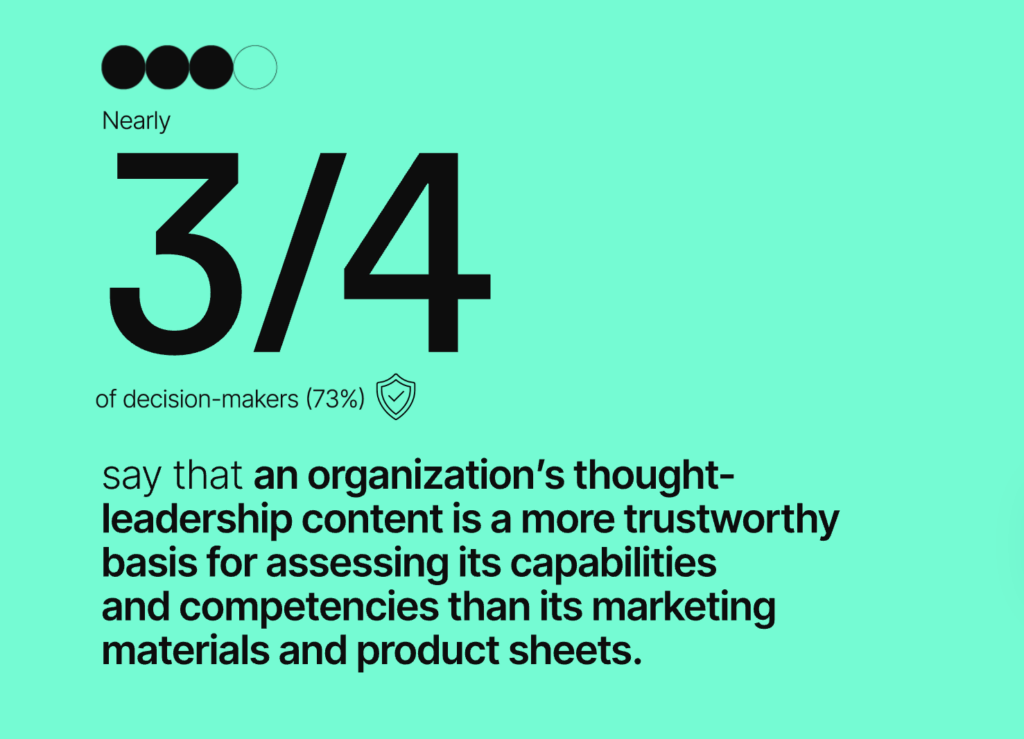
Source: 2024 Edelman–LinkedIn B2B Thought Leadership Impact Study
This doesn’t mean thought leadership is a “nice addition.” It suggests that much conventional B2B messaging is met with built-in skepticism. Thought Leader Ads perform better not because they’re more creative, but because they enter the conversation with a higher baseline of trust.
Why Many Companies Still Hesitate
If the logic is so clear, why is adoption still cautious? Part of the answer is control. Thought Leader Ads live on personal profiles. The tone is less polished. The author has the right to decline promotion. For organizations used to controlling every word, this feels uncomfortable.
There’s also visibility. When a brand ad underperforms, the failure is abstract. When an individual’s post is amplified, credibility feels personal – even if the upside is greater.
Finally, there’s hierarchy. The most trusted voice in a category isn’t always the most senior executive, or even an employee. Promoting customers or external experts requires a level of humility many organizations struggle with. So companies default to safer formats that feel familiar, even as their effectiveness slowly erodes.
The Cost of Ignoring The Shift
Sticking to brand-only advertising doesn’t just yield lower engagement. It leads to:
- Longer sales cycles, as buyers seek validation elsewhere
- Higher media spend, requiring more repetition to overcome skepticism
- Slower authority building, with your most insightful voices remaining unseen
This is also backed up by data. According to research from 6sense on B2B Buyer Experience, the majority of the buyer journey occurs independently and anonymously, before any direct vendor engagement. 85% of buyers establish purchase requirements pre-contact, underscoring that without human-led thought leadership or visible insights to shape early perceptions, authority erodes as buyers form opinions without your input.
What Good Thought Leader Ads Actually Require
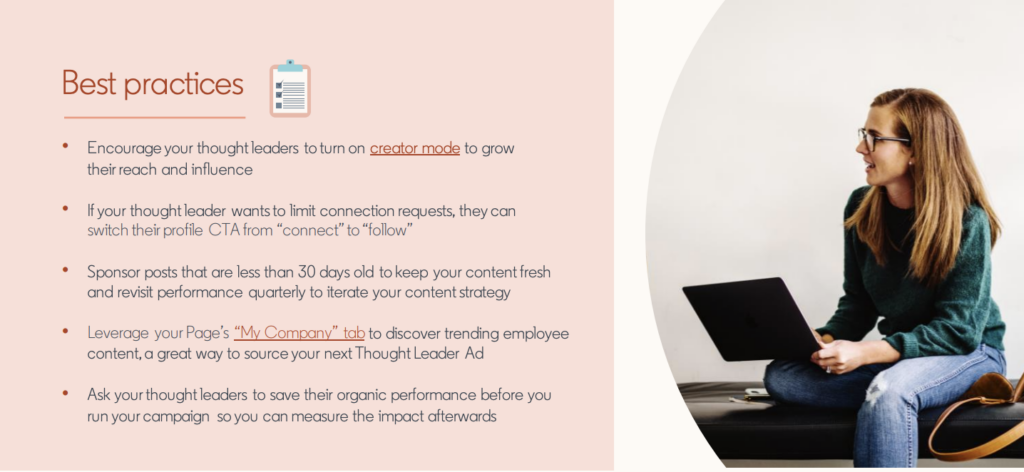
Using this format well is less about optimization and more about intent. Strong Thought Leader Ads typically amplify content that already works organically. They don’t manufacture posts for promotion; they extend the reach of ideas that have already resonated.
They rely on voices with judgment, not just impressive titles. People who can explain trade-offs, decisions, and consequences tend to outperform those who only describe outcomes. And they accept imperfection. Credibility doesn’t come from sounding flawless. It comes from sounding real.
Source: LinkedIn
LinkedIn’s own guidance reinforces this boundary: Thought Leader Ads are meant to promote authentic member content, not rebranded corporate messaging. When organizations respect that line, the format works. When they don’t, it underperforms – not because the tool is weak, but because the mindset is misaligned.
The Decision B2B Leaders Face in 2026
Thought Leader Ads aren’t the future of B2B advertising. They’re a response to declining institutional trust.
The real question isn’t whether this format fits your media mix. It’s whether your organization is willing to let real people represent it publicly with clarity, context, and credibility. Because if leadership won’t show up as human, no amount of paid distribution will close the trust gap. And buyers have already decided who they believe.