LinkedIn’s ecosystem continues to evolve under the influence of AI-driven discovery. From new guidance on optimizing content for generative search, to a shift in marketing measurement frameworks, to expanded safeguards against recruitment scams – the platform is adjusting across visibility, strategy, and trust. Here’s what’s changing and why it matters.
LinkedIn Introduces a Guide to Optimizing Owned Content for AI Discovery
LinkedIn has published a new guide on optimizing owned content for AI discovery, signaling a structural shift in how visibility works in generative search environments.
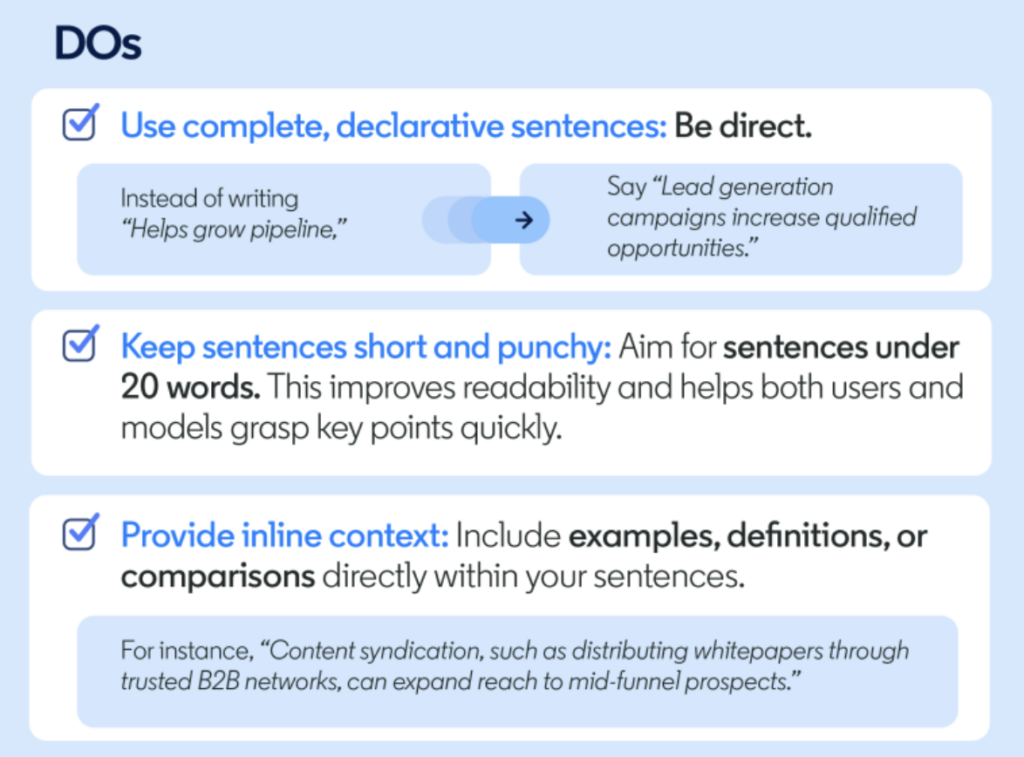
In its official Marketing Blog, LinkedIn explains that traditional SEO alone is no longer sufficient in environments where AI assistants synthesize answers instead of listing links. They extract passages and synthesize direct answers. This changes how content must be written and structured.
The guide outlines several clear recommendations.
- First, use complete, declarative sentences. Avoid vague phrasing such as “helps grow pipeline.” Instead, state the outcome directly.
- Second, keep sentences short and punchy. LinkedIn recommends aiming for sentences under 20 words. This improves readability and helps both users and AI models quickly grasp key points.
- Third, provide inline context. Include definitions, examples, or comparisons directly within the sentence. Do not rely on implied meaning. AI systems interpret what is explicitly stated.
Clarity is now a visibility factor. Content that is precise, structured, and explicit is more likely to be interpreted and surfaced in AI-driven discovery environments. It needs to function as a reliable knowledge source, not just a searchable webpage. This marks a significant transition – from optimizing for ranking to optimizing for retrieval and citation. Learn more about LinkedIn’s recommendations and explore the full guide here.
AI is Redefining Visibility – And LinkedIn is Adjusting its Marketing Playbook
LinkedIn’s marketing team acknowledges a structural shift in how discovery works online. As generative AI systems increasingly summarize information directly within search experiences, the traditional traffic model is under pressure.
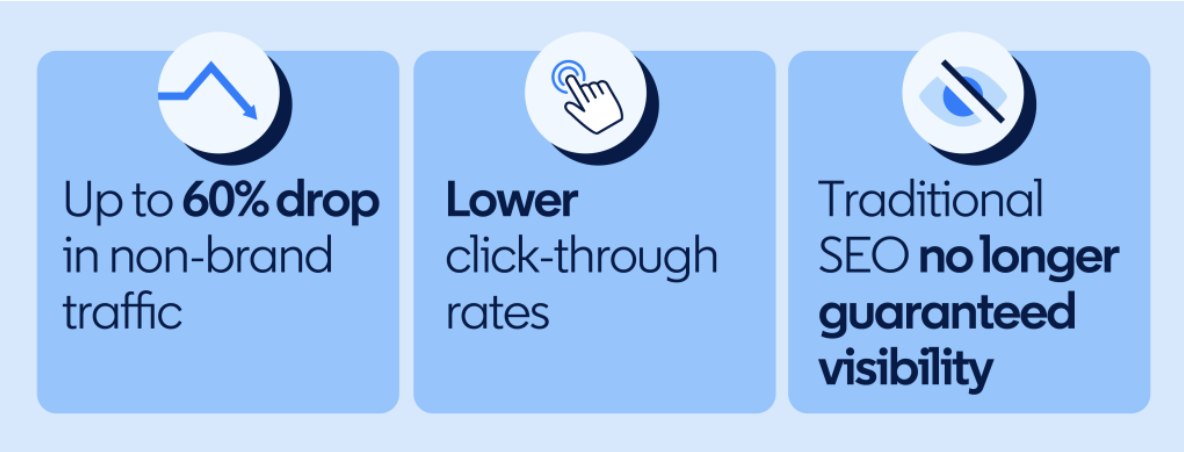
Traditional metrics like traffic and click-through rates are losing dominance. Visibility becomes less about visits and more about whether your brand is referenced, synthesized, or surfaced in AI-generated responses. LinkedIn highlights the growing importance of contextual authority and trust signals – factors that influence how confidently AI systems cite your content. The data reflects this shift.
In early testing across a subset of B2B topics, LinkedIn observed up to a 60% decline in non-brand awareness traffic, even while rankings remained stable. At the same time, research from SparkToro and Similarweb suggests that nearly 60% of Google searches in the US and EU now end without a click.
This creates a measurement challenge. Brands may remain visible in AI-generated answers, yet traditional metrics such as sessions and CTR no longer capture the full impact of that visibility.
In response, LinkedIn formed a cross-functional AI Search Taskforce, bringing together SEO, editorial, PR, product marketing, paid media, and brand teams. The objective is operational: monitor AI visibility, track citations and mentions in generative search results, correct surfaced misinformation, and prioritize content topics aligned with high demand signals.
The team also began redefining KPIs. Instead of focusing solely on traffic performance, LinkedIn is assessing share of voice within AI answers, citation presence, and authority across AI-powered search environments.
The strategic shift is clear: from optimizing for rankings to optimizing for reference. Brands that adapt their content structure and measurement models early will be better positioned as AI-driven discovery continues to expand. Learn more about LinkedIn’s full approach here.
Strengthening Trust: LinkedIn Expands Its Fight Against Scam Job Listings
As AI tools make it easier to generate convincing fake profiles and job postings, LinkedIn is strengthening its safeguards against recruitment scams.
According to recent reporting, the platform continues to remove millions of fake accounts and proactively blocks suspicious job listings before they reach users. Detection systems are designed to identify impersonation patterns and coordinated scam behavior at scale. LinkedIn is also expanding verification mechanisms, including identity confirmation features and recruiter legitimacy signals, aimed at increasing transparency across job listings.
In a recent post, Oscar Rodriguez, VP of Trust & Safety at LinkedIn, outlines how the platform helps job seekers stay safe – and what individuals should watch for when evaluating opportunities.
LinkedIn encourages members to verify recruiter profiles, look for identity confirmation signals such as verification badges or company email domains, and remain cautious when conversations quickly move off-platform. The company also reminds users that legitimate employers will not request sensitive financial information or payment during the hiring process.
On the platform side, LinkedIn continues expanding identity verification tools and automated risk detection systems. The focus is increasingly preventive – reducing scam visibility before it gains traction, rather than reacting after exposure.
The Linked Blog is here to help you or your brand have the best possible LinkedIn presence, so feel free to contact us if you need help! See more about what we can do for you here.