Somewhere between “Dear Sir or Madam” and “Please find attached,” B2B communication got stuck in time. While consumer brands learned to speak like humans, many B2B companies are still communicating as if their audience is a printer that needs instructions, not people making high-risk decisions. The result is content that sounds professional on the surface but is emotionally empty, interchangeable, and easy to ignore. And if you think that this is just a stylistic problem…well, it’s not. It’s a strategic one that directly affects trust, recall, and revenue.
The irony is that B2B brands have never had better access to their audiences. LinkedIn, newsletters, podcasts, and owned media give companies direct lines to decision-makers. And yet, most of that communication is wasted because it’s written in a language no one actually uses or remembers. Instead of clarity, we get jargon. Instead of conviction, we get hedging. Instead of perspective, we get sentences that feel like they were approved by legal before they were written.
The Fax Machine Syndrome: What B2B Writing Sounds Like Today on LinkedIn
If you strip most B2B content down to its core, it usually reads like a collection of abstract nouns glued together with passive verbs. Phrases such as “end-to-end solutions,” “leveraging synergies,” and “driving scalable outcomes” appear everywhere, yet rarely explain anything concrete. These expressions are designed to sound safe and impressive, but they fail to communicate meaning. They are optimized to avoid criticism, not to create understanding.
This type of language doesn’t exist because marketers are lazy or untalented. It exists because B2B organizations are deeply afraid of being misunderstood, challenged, or seen as unprofessional. So instead of saying something clearly and risking disagreement, they say nothing clearly and guarantee indifference. Over time, this creates a landscape where every brand sounds vaguely competent and completely forgettable.
What the Data Says About Boring B2B Content
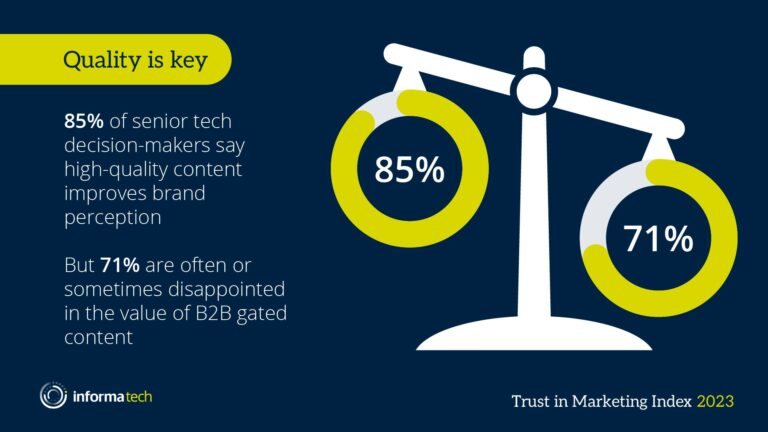
The problem isn’t theoretical. Research consistently shows that most B2B content fails to make an impact. According to Gartner, 71% of B2B decision-makers say that less than half of the content they consume is actually useful. LinkedIn and Edelman research shows that only 5–10% of B2B buyers can recall a specific brand after engaging with content, unless that content triggers an emotional response.
Harvard Business Review adds another uncomfortable truth: emotionally connected buyers are more than 50% more valuable than those who are merely satisfied. They are also significantly more likely to recommend, renew, and pay a premium. Despite this, data from the Content Marketing Institute shows that over 70% of B2B marketers still prioritize product features and functional messaging over narrative and perspective. The gap between what works and what is produced remains massive.
The Myth of the “Rational” B2B Buyer
One of the biggest lies in B2B marketing is that buyers are purely rational actors. In reality, B2B buyers are just as emotional as anyone else, but with higher perceived risk. A poor buying decision doesn’t just cost money. It can damage careers, credibility, and internal trust. That fear doesn’t make people more logical. Instead, it makes them more cautious and more dependent on signals of confidence and clarity.
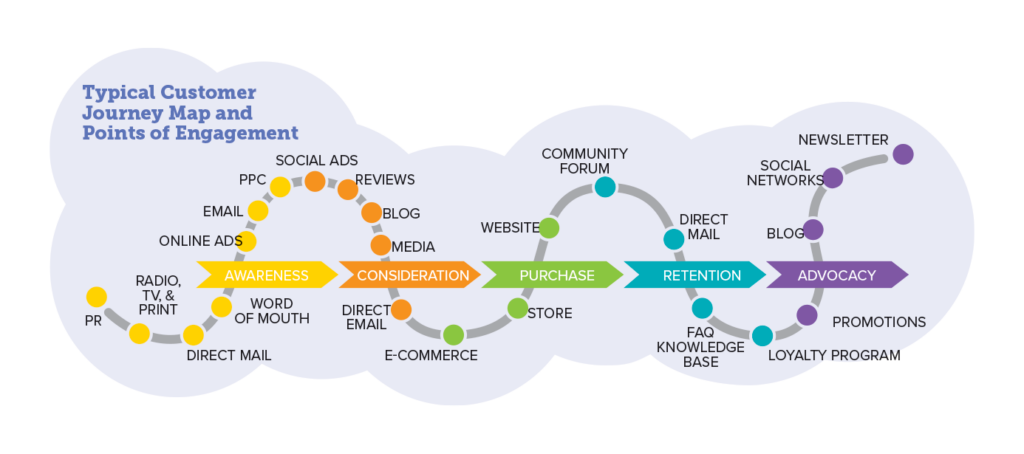
Google’s research into B2B purchasing behavior shows that buyers go through an average of 27 information touchpoints before committing to a decision. Yet the real bottleneck is not information. It’s confidence. Fax-machine language does not build confidence. Clear, human communication does. People trust brands that sound like they understand reality, not brands that hide behind generic terminology.
Why LinkedIn B2B Brands Keep Writing This Way
There are structural reasons this problem persists. First, much of B2B content is created by committee. When multiple stakeholders are involved in approving messaging, originality is often the first casualty. Every strong opinion is softened, every sharp insight is diluted, and what remains is language that offends no one and excites no one.
Second, vague language protects internal politics. Clear statements invite accountability. If a brand takes a stance, it can be questioned. If it speaks in abstractions, it can always reinterpret what it “meant.” Finally, many B2B teams simply copy competitors. Instead of developing a point of view, they benchmark tone and messaging until everyone sounds identical. In trying to fit in, they disappear.
The Hidden Cost of Sounding Like a Fax Machine
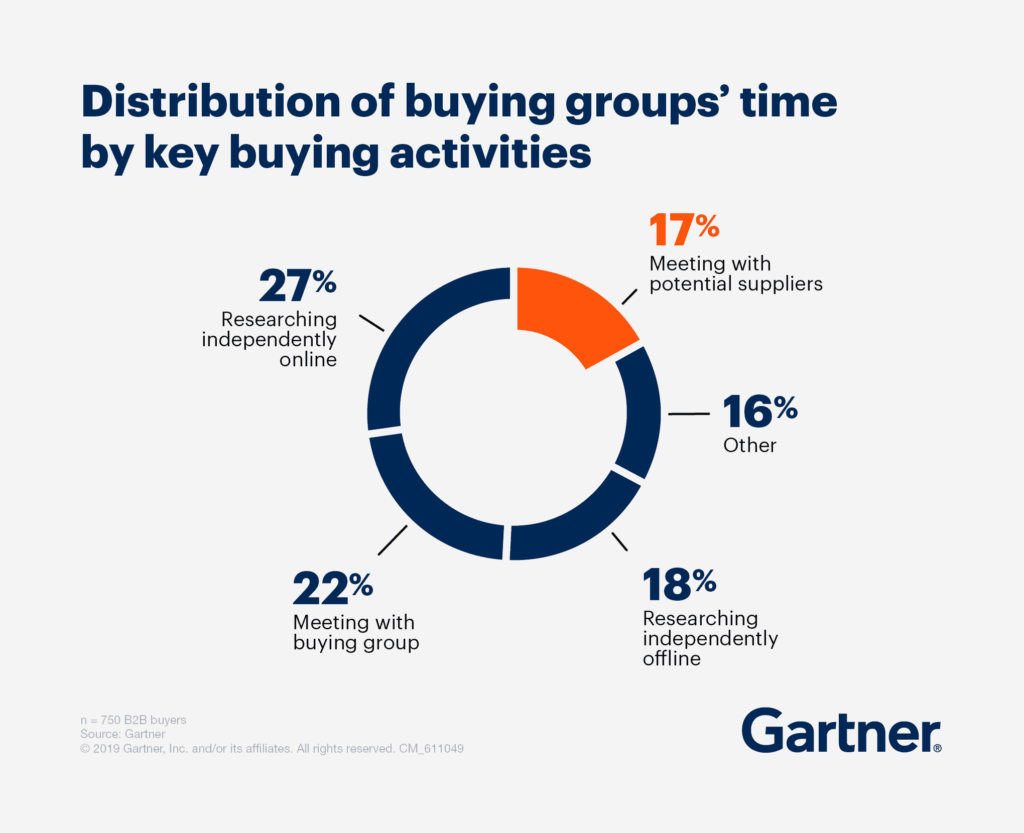
This style of communication doesn’t just hurt engagement metrics. It damages long-term brand equity. Gartner data shows that B2B buyers spend only about 17% of their total buying journey actively engaging with suppliers. When that engagement happens, brands have a very small window to be remembered. If your content sounds like it could have been written by anyone, it will be remembered by no one.
On platforms like LinkedIn, the contrast is even clearer. Posts written in first person consistently outperform corporate-style messaging. Content that shows a real human perspective, especially from founders or leaders, generates significantly higher engagement and trust. Fax-machine language is not neutral. In a crowded information environment, it actively pushes your brand out of relevance.
How to Fix B2B Writing Without Becoming Cringe
Fixing this does not mean turning your brand into a meme account or abandoning professionalism. It means rethinking what professionalism actually is. Professional communication is not about sounding complex. It’s about being understood. The first step is to write as if you are speaking to one intelligent person, not an industry or a demographic group.

The second step is to replace abstract claims with real decisions and real consequences. Instead of saying you “optimize workflows,” explain what stops working without you. Instead of claiming “thought leadership,” show how your thinking changes outcomes. Finally, allow personality to exist. Brands are remembered for how they make people feel, not for how carefully they avoid saying anything memorable.
The Real Shift B2B Brands Need to Make
The future of B2B communication is not louder, trendier, or more automated. It is clearer, braver, and more human. As AI tools make it easier to generate generic content at scale, differentiation will come from perspective, judgment, and voice. Anyone can produce words. Very few brands are willing to stand behind what they say.
B2B brands don’t need to stop being serious. They need to stop being afraid. Because in a world where everyone sounds like a fax machine, the brands that speak like humans will always stand out.
The Linked Blog is here to help you or your brand have the best possible LinkedIn presence, so feel free to contact us if you need help! See more about what we can do for you here.