LinkedIn is starting to look and feel a little different. Two major platform updates are reshaping how professionals share, interact, and build credibility on the world’s largest business network. On one hand, LinkedIn is becoming more open to newsworthy and educational content that reflects real-world issues. On the other hand, it’s tightening its rules against artificial engagement tactics that undermine authenticity.
Together, these changes signal a defining moment for the platform, one that’s moving LinkedIn from a purely professional space toward something broader, deeper, and more human.
LinkedIn Opens the Door to More Newsworthy and Educational Content
LinkedIn has updated its Professional Community Policies to allow a wider range of educational and newsworthy content, even in cases where that content might technically break existing rules. It’s a bold move that reflects how the platform sees its evolving role in modern communication: not just a digital résumé hub, but a space for meaningful, real-world discussion.
In its statement, LinkedIn noted that “there are rare times when content that violates our policies is educational or newsworthy enough that keeping it on the platform is in the public interest.” This shift gives LinkedIn’s moderation teams more flexibility to evaluate context, not just content, when determining whether something belongs on the platform.
In practice, this means that posts showing medical procedures, on-the-ground reporting from conflict zones, or firsthand documentation of major global events could now remain visible, provided they serve an educational purpose. It’s a recognition that professionals don’t live in isolation from the world’s realities, and that sometimes, professional understanding depends on seeing those realities firsthand.
Of course, this change doesn’t mean LinkedIn is becoming an unfiltered social network. The company has made it clear that content will still be moderated with care. When posts are graphic or potentially distressing, they’ll appear behind sensitive content warnings, allowing users to decide whether they want to view them. Each case will go through a contextual review, weighing the educational or societal value against potential harm.
This new level of nuance shows LinkedIn’s ambition to become more than a professional newsfeed, it’s evolving into a global knowledge-sharing community. By leaning into transparency and awareness, LinkedIn is positioning itself as a space where professionals can learn about the world from credible, first-hand sources.
It’s also a practical response to how people now use the platform. The rise of video content and real-world storytelling has blurred the line between personal, professional, and societal topics. As discussions become more diverse, LinkedIn’s challenge is to stay true to its professional DNA while adapting to an information landscape that moves faster and feels more real than ever before.
LinkedIn’s Crackdown on Engagement Pods and Fake Activity
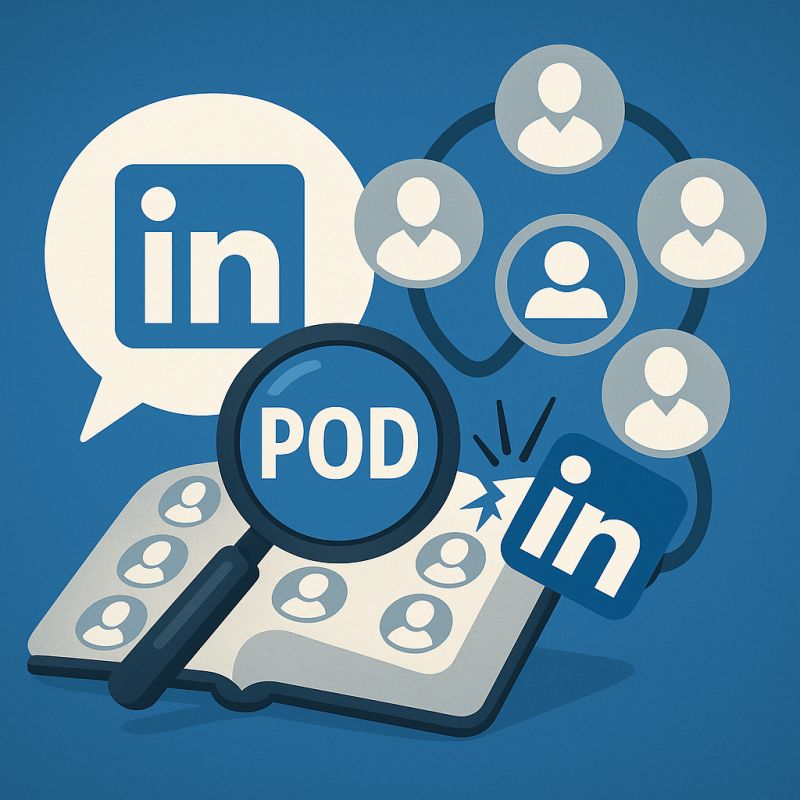
While the first update encourages openness, the second one doubles down on integrity. LinkedIn has officially announced stronger measures against engagement pods, organized groups of users who like, comment, and share each other’s posts to manipulate visibility. The issue has been a growing concern across the community. Pods artificially inflate engagement metrics, helping certain posts appear more popular than they are and distorting what shows up in users’ feeds. As a result, valuable content often gets buried under performative noise.
LinkedIn’s VP of Product Management, Gyanda Sachdeva, explained the company’s renewed focus: “Our goal is to make engagement pods entirely ineffective.” To achieve that, LinkedIn is ramping up its detection tools, using behavioral signals to flag inauthentic interactions, and limiting the reach of suspicious posts.
The crackdown also extends to third-party automation tools, browser extensions and plug-ins that automate bulk commenting or liking. LinkedIn has made it clear that these tools violate its Terms of Service, and the company intends to take action against both the users who rely on them and the developers who create them.
This is a significant move, and not just from a technical standpoint. It’s a philosophical one. For years, LinkedIn’s algorithm has been shaped by a delicate balance between visibility and authenticity. Engagement pods disrupted that balance by creating echo chambers that rewarded consistency over quality. By tackling this issue head-on, LinkedIn is sending a clear message: meaningful interaction will always win over manufactured attention.
Still, enforcement won’t be simple. Many pod activities happen off-platform, through private groups or encrypted chats. Detecting them requires sophisticated AI-driven monitoring and community reporting. But the fact that LinkedIn is making public statements and investing in active countermeasures shows that it recognizes the long-term risk. If users stop trusting what they see in their feed, the network’s entire value proposition erodes.
By cleaning up engagement behavior, LinkedIn isn’t just protecting its brand, it’s protecting the credibility of professional voices who use the platform to build influence the right way.
The Bigger Picture: Authenticity Is the New Algorithm on LinkedIn
Put these two updates side by side, and you can see exactly where LinkedIn is headed. The platform is evolving into a more transparent, credible, and human ecosystem, one that rewards genuine participation rather than performance.
For creators, this means focusing less on chasing reach and more on delivering insight. Educational and thought-provoking content will continue to outperform superficial engagement, especially as LinkedIn’s algorithm grows smarter about identifying authentic contributions.
For brands, it’s a wake-up call to prioritize thought leadership over trend-jacking. The companies that thrive on LinkedIn in 2025 will be the ones that invest in real conversations, clear positioning, and data-driven storytelling.
And for professionals, it’s a reminder that engagement is a two-way street. Posting content isn’t enough, commenting thoughtfully, sharing insights, and interacting meaningfully are what build credibility over time. LinkedIn is no longer just a platform for networking; it’s becoming a space for professional dialogue that reflects the complexity of the real world. These updates – one promoting openness, one enforcing integrity, prove that the company’s focus is not just on growth, but on building a sustainable, trustworthy community for the long term.
The Linked Blog is here to help you or your brand have the best possible LinkedIn presence, so feel free to contact us if you need help! See more about what we can do for you here.