For years, LinkedIn creators have relied on impressions, engagement rates, and follower growth to understand whether their content was performing. While these metrics offered useful signals, they left one important question unanswered: who is actually seeing your content?
A post with 50,000 impressions might look successful on the surface, but was it primarily viewed by people who already know you, or was it reaching entirely new audiences? Until now, LinkedIn offered very little visibility into that distinction. That is beginning to change.
LinkedIn is rolling out a new analytics feature that provides a clearer breakdown of where your content reach is coming from. Creators will now be able to see what percentage of their post impressions come from their existing network versus audiences outside of it. While the update may appear simple at first glance, it has the potential to fundamentally change how professionals evaluate content performance and audience growth on the platform.
The New Metrics Explained
The new analytics feature introduces two visibility metrics inside post analytics:
- In-Network Reach – this represents the percentage of impressions generated from people who are already connected with you or follow you on LinkedIn. These are members who are already part of your existing audience and who regularly encounter your content through their feed.
- Out-of-Network Reach – this measures the percentage of impressions generated from people who are not connected with you and do not follow you. These users discover your content through LinkedIn’s recommendation systems, reposts, search results, hashtag distribution, and other discovery surfaces across the platform.
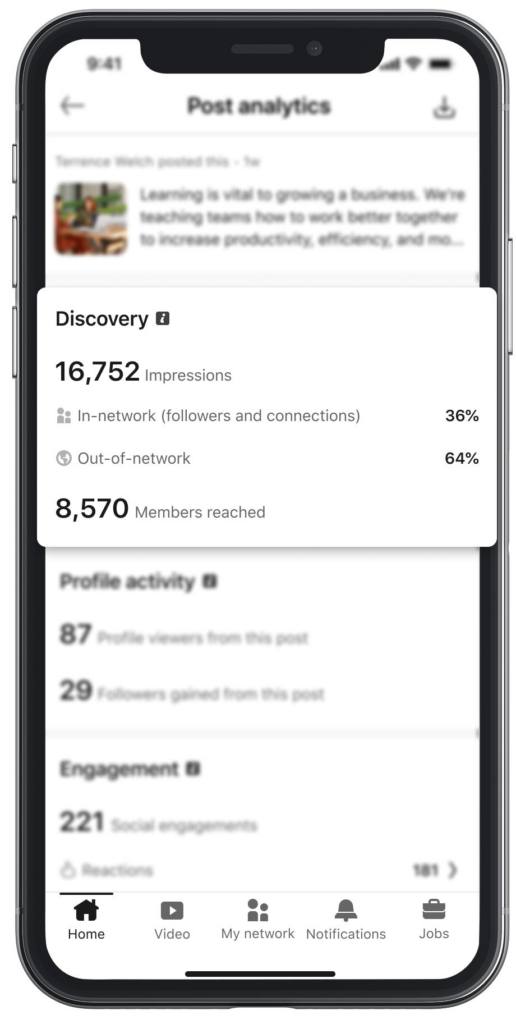
The metrics appear within the Discovery section of post analytics, providing creators with a much clearer understanding of how LinkedIn is distributing their content.
Why This Matters More Than It Seems
Historically, LinkedIn creators have focused heavily on total impressions as a measure of success. The problem is that impressions alone do not reveal whether content is helping you grow.
Imagine two posts that both generate 20,000 impressions. The first post reaches almost entirely people already within your network. It performs well among existing followers but does little to expand your visibility. The second post reaches thousands of professionals who have never encountered your content before. While total impressions are identical, the strategic value of the second post is often much greater because it introduces your expertise to entirely new audiences.
Until now, distinguishing between these scenarios was difficult. This new feature provides creators with a missing layer of context that helps answer questions such as:
- Which topics attract new professionals to my profile?
- Is my content helping me grow beyond my current audience?
- Which posts strengthen relationships with my existing network?
- Is LinkedIn actively recommending my content outside my connections?
Instead of measuring reach alone, creators can now measure audience expansion.
The Difference Between Growth Content and Community Content
One of the most valuable insights this update may reveal is that not all content serves the same purpose. Some posts are designed to strengthen relationships with an existing audience. These might include personal updates, industry opinions, company milestones, or reflections that resonate strongly with people who already know and trust the creator. Other posts function as discovery content. These are often educational, insight-driven, data-focused, or highly shareable pieces that LinkedIn’s recommendation systems can distribute to broader audiences.
With the new reach breakdown, creators can begin identifying which content types excel at each objective. A post with a high percentage of in-network reach may indicate strong audience loyalty and engagement. A post with a high percentage of out-of-network reach may indicate strong discoverability and audience growth potential. Neither outcome is inherently better. The value depends on the creator’s goals.
What This Reveals About LinkedIn’s Direction
Beyond the analytics update itself, this feature signals something important about LinkedIn’s broader strategy. Over the past year, the platform has invested heavily in recommendation systems powered by artificial intelligence and large language models. LinkedIn’s Feed is increasingly designed to distribute valuable content based on relevance rather than connection proximity alone. As a result, content has more opportunities than ever to reach professionals outside a creator’s immediate network.
The introduction of out-of-network reach analytics effectively acknowledges this shift. LinkedIn is providing creators with a way to see how often its recommendation systems are introducing their content to entirely new audiences. In other words, the platform is becoming less about who you know and increasingly about what value your content creates.
A New Layer of Content Intelligence
For creators, marketers, founders, consultants, and professionals building a personal brand, this update adds an important missing piece to LinkedIn analytics.
- Impressions tell you how many people saw your content.
- Engagement tells you how people reacted.
- The new reach metrics tell you who those people actually are.
Together, these measurements create a much more complete picture of content performance. A post that generates high engagement among existing followers serves a different purpose than a post that expands visibility beyond your network. Understanding that distinction allows creators to make more informed decisions about content strategy moving forward.
LinkedIn has spent years refining how content is distributed across the platform. With this update, creators finally gain greater visibility into how that distribution actually works, and for anyone serious about audience growth, that may be one of the most valuable analytics updates LinkedIn has released in years.
The Linked Blog is here to help you or your brand have the best possible LinkedIn presence, so feel free to contact us if you need help! See more about what we can do for you here.