Something interesting is happening on LinkedIn. The platform is becoming more transparent about how visibility is earned, more intentional about how businesses reach professional audiences, and more vocal about the skills leaders need to navigate an AI-driven future.
Taken separately, this week’s announcements might look like routine product updates and research findings. Together, however, they point to a broader shift. LinkedIn is increasingly positioning itself not just as a professional network, but as a platform that helps determine how expertise is discovered, how influence is measured, and how organizations adapt as AI transforms the world of work.
Here are the three developments that best illustrate that direction.
LinkedIn Brings New AI Leadership to Its Marketing and Sales Business
LinkedIn has appointed Anthony Chavez as its new Chief Product Officer for Marketing & Sales Solutions, placing an experienced product leader with a background in advertising technology and agentic AI at the helm of one of the company’s most important business units.
While the announcement focuses on leadership, the strategic implications are much broader. Marketing & Sales Solutions represents a significant part of LinkedIn’s commercial engine, and Chavez’s appointment comes at a time when AI is rapidly changing how companies identify, engage, and influence buyers.
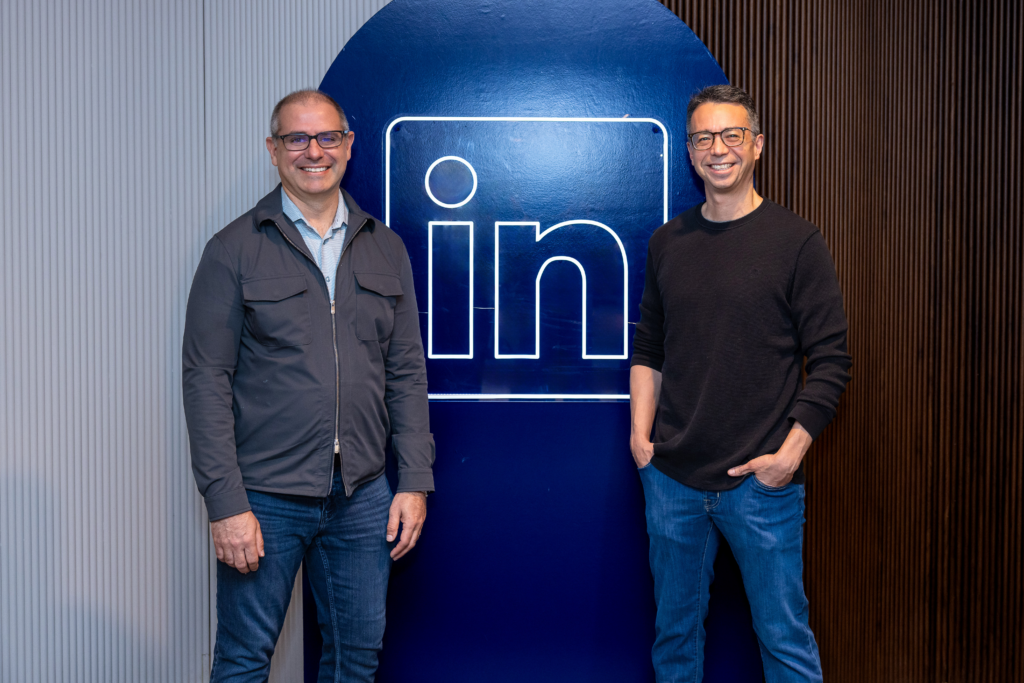
Source: LinkedIn
In his announcement, Chavez pointed to an opportunity to build what comes next as AI reshapes B2B decision-making. That statement aligns with a broader trend across the industry, where marketers are increasingly looking beyond traditional targeting and toward AI-powered systems capable of understanding intent, context, and buying behavior.
The appointment suggests LinkedIn is preparing for a future in which B2B marketing becomes more intelligent, more automated, and more deeply integrated into the professional workflows happening across the platform. As AI continues to redefine how purchasing decisions are researched and influenced, LinkedIn appears determined to remain at the center of that evolution.
LinkedIn’s New Reach Metrics Reveal How Content Actually Grows
LinkedIn is rolling out a new analytics feature that separates In-Network Reach from Out-of-Network Reach, giving creators a clearer picture of where their visibility is coming from.
For years, impressions have been one of the platform’s most closely watched metrics. Yet impressions alone never answered a critical question: are people seeing your content because they already know you, or because LinkedIn is actively recommending your content to new audiences?
The new metrics address exactly that gap. In-Network Reach measures impressions generated from followers and connections, while Out-of-Network Reach tracks impressions coming from people outside a creator’s existing audience.
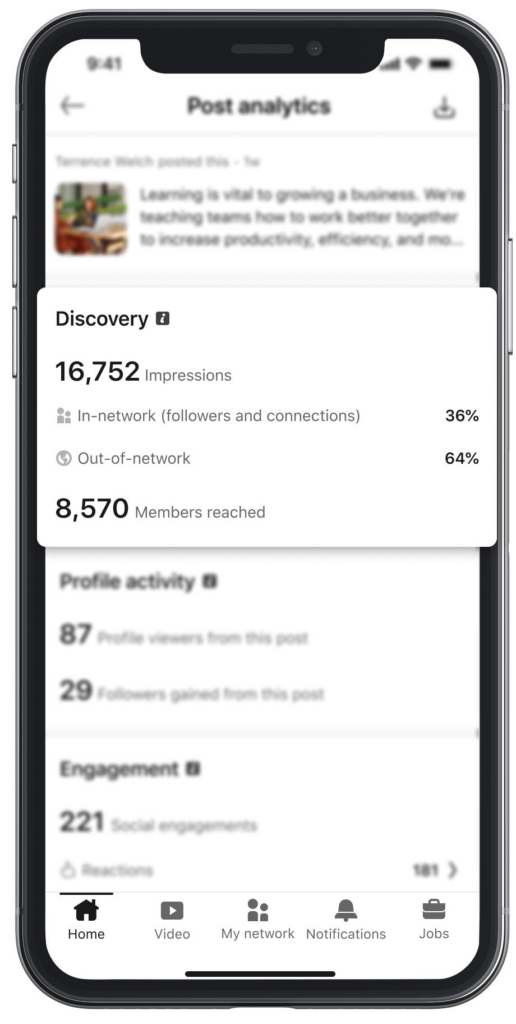
Source: LinkedIn
The update may seem minor, but it reflects a larger change in how LinkedIn distributes content. The platform has invested heavily in AI-powered recommendation systems over the last two years, increasingly surfacing posts based on relevance rather than purely on connection proximity.
For creators, consultants, executives, and brands, this introduces a new way to evaluate content performance. Some posts strengthen relationships with an existing audience. Others expand visibility beyond it. Understanding the difference helps creators move beyond vanity metrics and better understand how LinkedIn’s recommendation engine is working on their behalf.
More importantly, the feature confirms something many users have suspected for years: LinkedIn is becoming less about who you know and increasingly about the value your content creates.
90% of Executives Say Leadership Now Requires Continuous Learning
New LinkedIn research suggests that AI is not only changing jobs – it is changing leadership itself.
According to a survey of more than 1,200 C-suite executives across the United States, United Kingdom, and India, 90% say their own roles now require continuous skill-building to keep pace with technological and organizational change.
The findings highlight how AI adoption is moving beyond experimentation and becoming embedded into everyday business operations. 82% of executives report that AI is already creating entirely new roles within their organizations, while 85% identify innovation – not efficiency – as the most important outcome of AI investments.

Source: LinkedIn
One of the study’s most interesting findings is the emergence of what LinkedIn describes as a growing “workforce blind spot.” Roughly half of leaders say they lack clear visibility into the skills and capabilities their organizations will need in the future, even as they accelerate AI adoption.
The research suggests that the next phase of AI transformation will be less about technology itself and more about how people and technology work together. Nearly half of respondents identified closer collaboration between technology and HR leaders as essential for building an AI-ready workforce, while 42% said optimizing human-AI workflows is now a top priority.
The message is clear: in an AI economy, learning is no longer just an employee responsibility. Increasingly, it is becoming a leadership requirement.
The Linked Blog is here to help you or your brand have the best possible LinkedIn presence, so feel free to contact us if you need help! See more about what we can do for you here.