The new feature connects professional tools directly to LinkedIn profiles, giving members a more dynamic way to showcase their skills and work
LinkedIn has introduced a new feature called Connected Apps, allowing members to connect workplace tools directly to their LinkedIn profiles. The launch enables users to showcase activity and credentials from a growing list of third-party platforms, including GitHub, HubSpot, and Lovable. According to LinkedIn, 19 apps are available at launch, with 10 more already on the way.
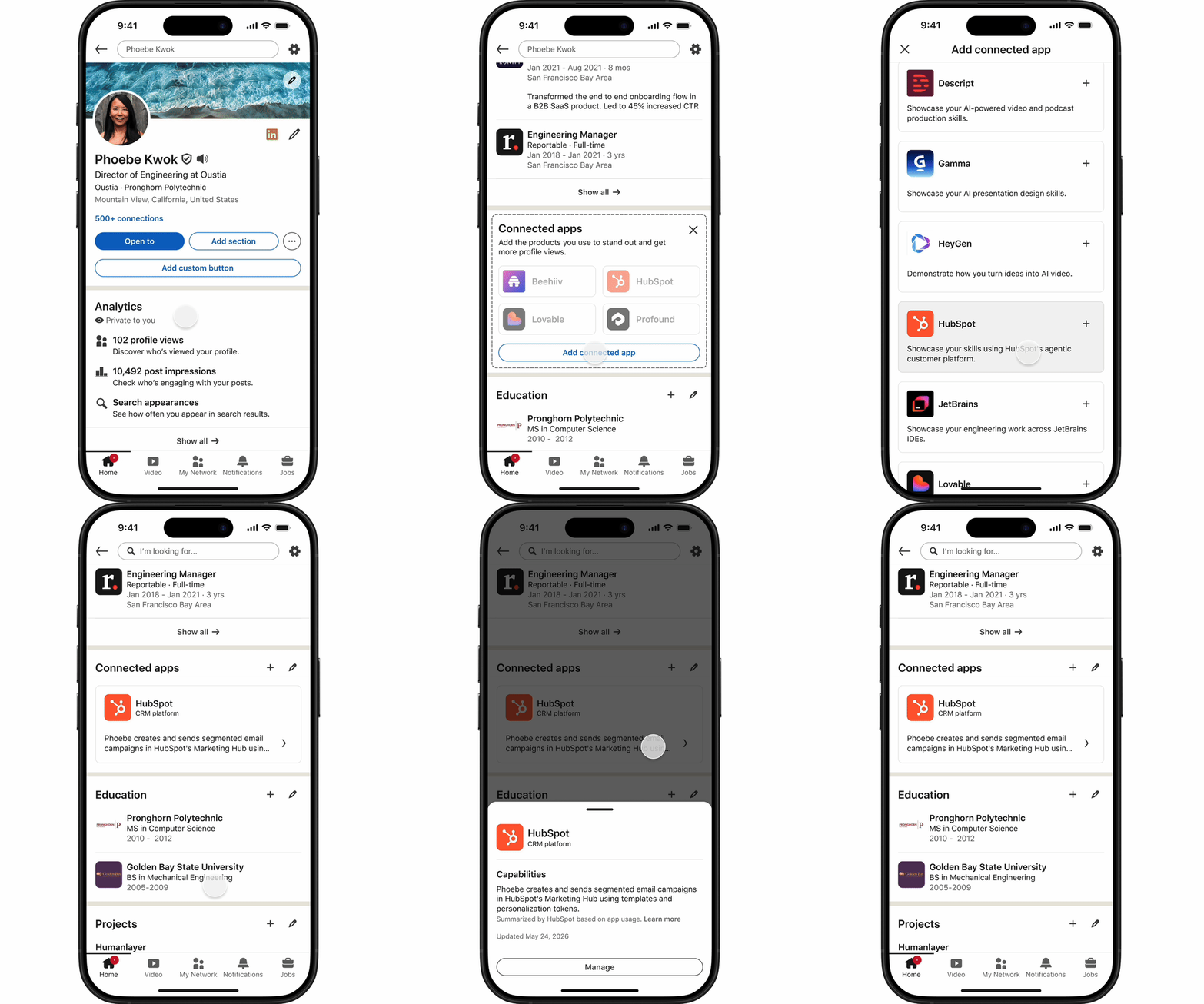
At a product level, the feature is straightforward. Members can connect supported applications to their profiles and display information about certifications, projects, achievements, or platform-specific expertise. As those credentials evolve, profile information can update alongside them.
LinkedIn Is Rethinking Professional Identity
Yet the significance of the launch extends beyond profile customization. For most of its history, LinkedIn profiles have been built around relatively static signals: employers, job titles, education, and self-reported skills.
Connected Apps introduces a different model. Instead of relying solely on what members say they can do, LinkedIn is increasingly looking at evidence generated through the tools people use every day.
Lakshman Somasundaram, Senior Director of Product at LinkedIn, described the launch as part of a broader vision for professional identity. According to Somasundaram, professional identity is becoming less about where someone has worked and more about what they can actually do. The ability to connect external tools directly to a profile creates a more dynamic representation of skills, expertise, and ongoing professional development.
That shift reflects a broader reality in today’s labor market.
Why Job Titles Matter Less Than They Used To
The launch comes as LinkedIn continues to emphasize the accelerating pace of skill change. In announcing the feature, LinkedIn CEO Daniel Shapero pointed to the company’s research showing that workers are expected to see roughly half of the skills required for their jobs change over the next decade.
In that environment, traditional profile elements become less informative. A job title earned several years ago may reveal where someone worked, but it says little about the tools, technologies, and capabilities they use today. Connected Apps attempts to fill that gap by surfacing signals that evolve alongside a member’s day-to-day work.
The feature also aligns with a broader trend already visible on the platform. LinkedIn says posts showcasing projects, products, and professional work have grown significantly over the past year, suggesting members are increasingly using the platform to demonstrate expertise rather than simply document career history.
Beyond visibility, Connected Apps also introduces another important concept:
A New Layer of Verification
For years, LinkedIn profiles have largely relied on self-reported information. While the platform has expanded verification initiatives for identities, employers, and educational institutions, most skills and accomplishments still depend on what users choose to write about themselves.
When achievements, certifications, or activities originate from external platforms, they become harder to inflate and easier for others to trust. In effect, LinkedIn is creating additional layers of credibility by connecting professional identity directly to professional activity.
It’s a subtle change, but one that could become increasingly important as AI-generated profiles, automated content, and digital credentials become more common across professional platforms.
The Long-Term Direction for LinkedIn Profiles
Connected Apps may look like a feature update, but it also offers a glimpse into where LinkedIn appears to be heading. The platform has spent the past few years expanding profile verification, skills-based hiring tools, learning products, and creator features. Connected Apps fits naturally into that strategy by making profiles more dynamic and more reflective of current capabilities.
Rather than functioning as a digital résumé updated every few months, LinkedIn profiles are gradually evolving into living professional records that update as people learn, build, create, and contribute.
For now, the feature launches with a relatively small group of applications. But if LinkedIn continues expanding the ecosystem, Connected Apps could become one of the company’s most significant profile updates in years – not because it changes how profiles look, but because it changes what profiles represent.
The message behind the launch is becoming increasingly clear: in a world where skills evolve rapidly, professional identity can no longer be defined solely by where you’ve worked. It increasingly depends on what you can demonstrate today.
Written with the assistance of AI tools and reviewed by the author.