
Advertisers on LinkedIn have long been able to target professionals based on job title, seniority, industry, company size, and skills. Now, the platform is expanding those capabilities even further.
LinkedIn has introduced three new targeting categories inside Campaign Manager: Company targeting, General Interest targeting, and Device targeting. Available globally, the update gives advertisers additional ways to define exactly who should see their campaigns.
At first glance, these may seem like incremental additions to LinkedIn’s advertising toolkit. But together they point toward a broader shift. LinkedIn is steadily moving beyond understanding individual professionals and becoming increasingly capable of understanding the businesses they work for.
Company Targeting Brings More Business Context
The most significant addition is a new collection of company-level attributes that enables marketers to segment organisations in ways previously unavailable.
Advertisers can now target companies based on:
- funding stage
- recently funded status
- business type, including public companies and nonprofits
- mergers and acquisitions
- regions served
While LinkedIn has long allowed campaigns to target companies by industry, size, or revenue, these new attributes focus on where a business is in its lifecycle rather than simply what it is.
A recently funded startup has very different priorities from a mature public company, while organizations going through acquisitions or expanding into new markets often enter periods of increased investment. These new signals allow advertisers to align campaigns with those moments instead of relying solely on static company information.
More importantly, they reflect a broader evolution inside LinkedIn’s advertising platform. Historically, LinkedIn’s greatest strength has been its understanding of people – their roles, skills, industries, and seniority. These new company signals show the platform is becoming better at understanding the organizations themselves, giving B2B marketers more opportunities to build campaigns around business context instead of demographics alone.
More Than One Hundred New Interest Categories
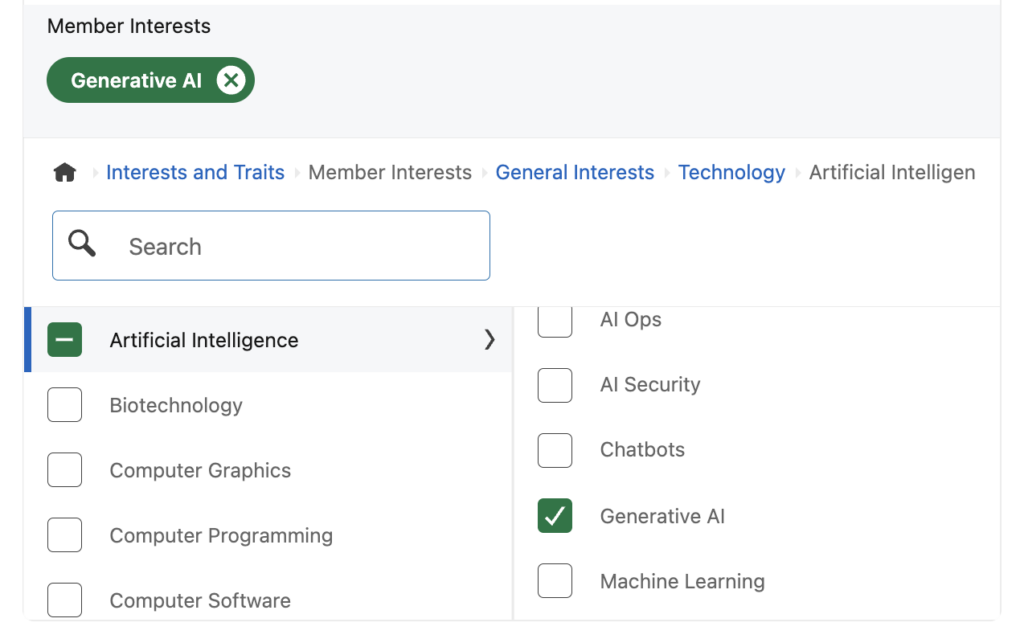
Alongside the company updates, LinkedIn has introduced more than 100 new interest categories, including emerging topics such as Generative AI.
Interest targeting has existed on LinkedIn for years, using members’ activity and engagement to infer professional interests. Expanding that taxonomy allows advertisers to reach audiences around a broader range of specialized topics without relying entirely on job titles or industries.
That becomes increasingly valuable as professional roles continue to evolve. Someone’s title may not fully reflect the subjects they actively learn about or engage with. Interest signals help advertisers reach professionals based on what they care about, creating another layer of relevance alongside traditional audience attributes.
Device Targeting Adds Another Optimization Layer
The third addition is device targeting. Advertisers can now segment campaigns by operating system, including iOS and Android, or by device type such as desktop, mobile, and tablet.
While this capability is common across digital advertising platforms, its introduction to LinkedIn gives marketers another useful optimization tool. Campaigns promoting mobile apps, for example, may benefit from focusing on smartphone users, while desktop campaigns may suit products that require longer research or more complex buying journeys.
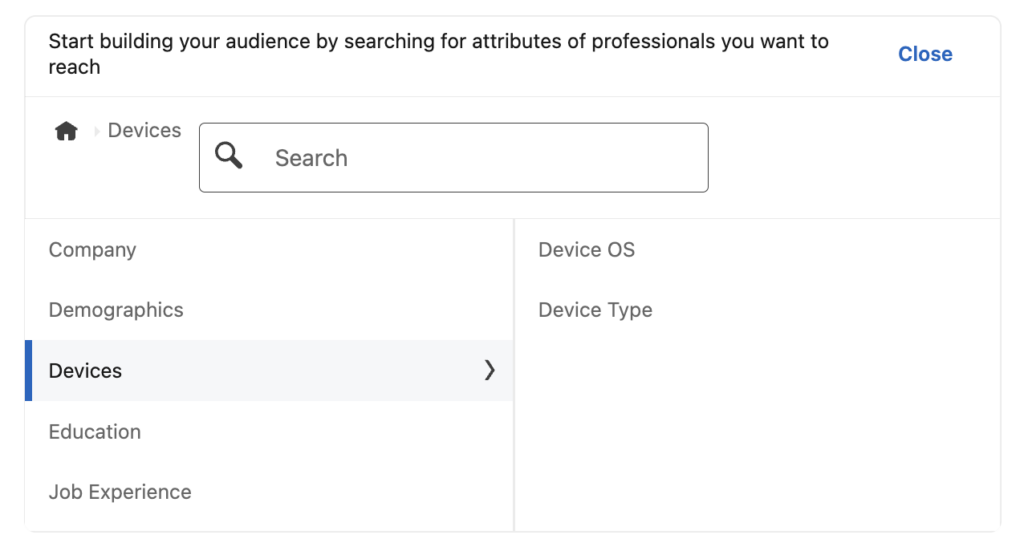
Although it is the smallest of the three updates, device targeting adds another layer of flexibility to Campaign Manager.
The announcement also aligns with LinkedIn’s broader investment in AI-powered advertising tools such as Accelerate and Auto-Targeting. Richer audience signals provide LinkedIn’s recommendation systems with more context to optimize campaign delivery and identify audiences most likely to convert.
The Bigger Direction
LinkedIn’s latest targeting update may appear to be a routine expansion of Campaign Manager, but it reflects a broader trend across the platform.
For years, LinkedIn has built its advertising advantage around understanding professionals. These new targeting capabilities suggest it is increasingly investing in understanding the companies behind those professionals as well.
That shift is particularly important for B2B marketers. Rather than targeting organizations solely by industry or size, advertisers can now incorporate signals such as funding stage, business type, expansion, and acquisitions into their audience strategy. Combined with richer interest data and additional campaign controls, that creates more opportunities to reach buyers with greater precision.
As LinkedIn continues expanding its audience intelligence, advertising on the platform is becoming less about reaching the right job titles and increasingly about reaching the right businesses at the right moment.
Written with the assistance of AI tools and reviewed by the author.