LinkedIn has always positioned itself as the platform where professionals connect, companies hire, and expertise is shared. But this week’s updates suggest that trust is becoming one of the platform’s biggest challenges.
From an investigation into alleged ghost jobs, to growing concerns over AI-generated content, and a new feature designed to make professional collaboration more transparent, LinkedIn is introducing changes that all point in the same direction: making the platform more credible.
Texas investigates LinkedIn over alleged “ghost jobs”
LinkedIn is facing an investigation from the Texas Attorney General, who alleges the platform may have misled users by allowing so-called “ghost jobs” – listings that are no longer active or were never intended to be filled – while promoting Premium subscriptions as a way to improve job search success.
The investigation will examine LinkedIn’s job verification practices, Premium marketing, and internal processes around job postings. According to the Attorney General’s office, studies suggest that between 20% and 30% of online job listings could fall into the “ghost job” category.
LinkedIn responded by highlighting the safeguards it already provides, including company response times, hiring activity indicators, and verification features for recruiters, jobs, and company pages. The company also emphasized that it continues investing in tools that help members identify legitimate opportunities.
Whether or not the investigation leads to legal consequences, it shines a spotlight on one of LinkedIn’s biggest responsibilities: maintaining trust in its role as the world’s largest professional hiring platform.
AI-generated content is becoming impossible to ignore
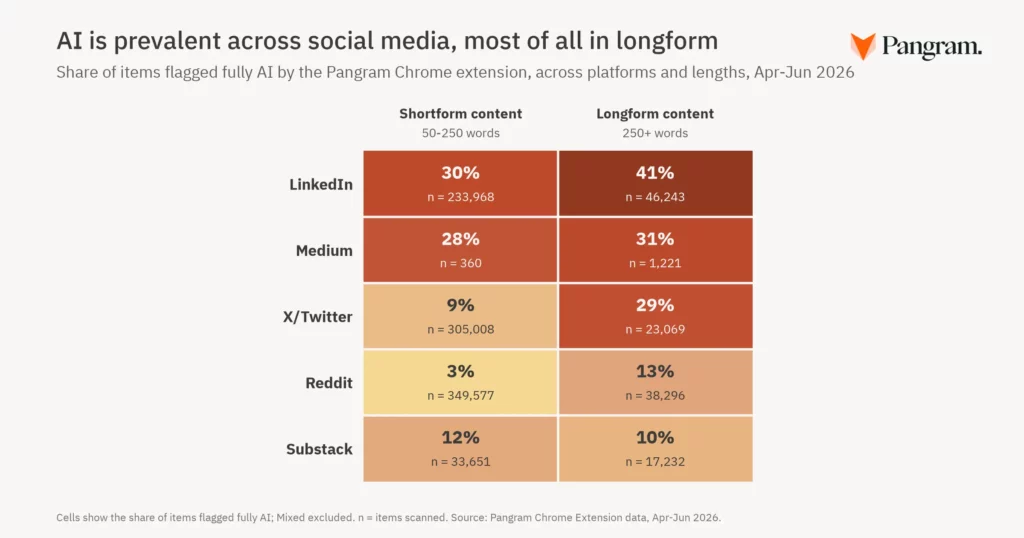
A new analysis from Pangram highlights a growing challenge across LinkedIn: the rapid increase of AI-generated posts.
Researchers found that posts containing phrases commonly associated with large language models have increased dramatically over the past year, suggesting that AI-assisted writing is becoming a mainstream part of content creation. While AI helps many professionals write faster, it also raises concerns about authenticity, originality, and audience trust.
Source: Pangram
The findings reinforce a trend many LinkedIn users have already noticed: polished but repetitive posts that often feel generic despite receiving strong engagement.
For creators and marketers, the message is clear. AI can accelerate content production, but professional credibility still depends on genuine expertise, original thinking, and personal perspective. As AI-generated content becomes more common, authentic voices may become even more valuable.
Collaborative Posts are coming to LinkedIn
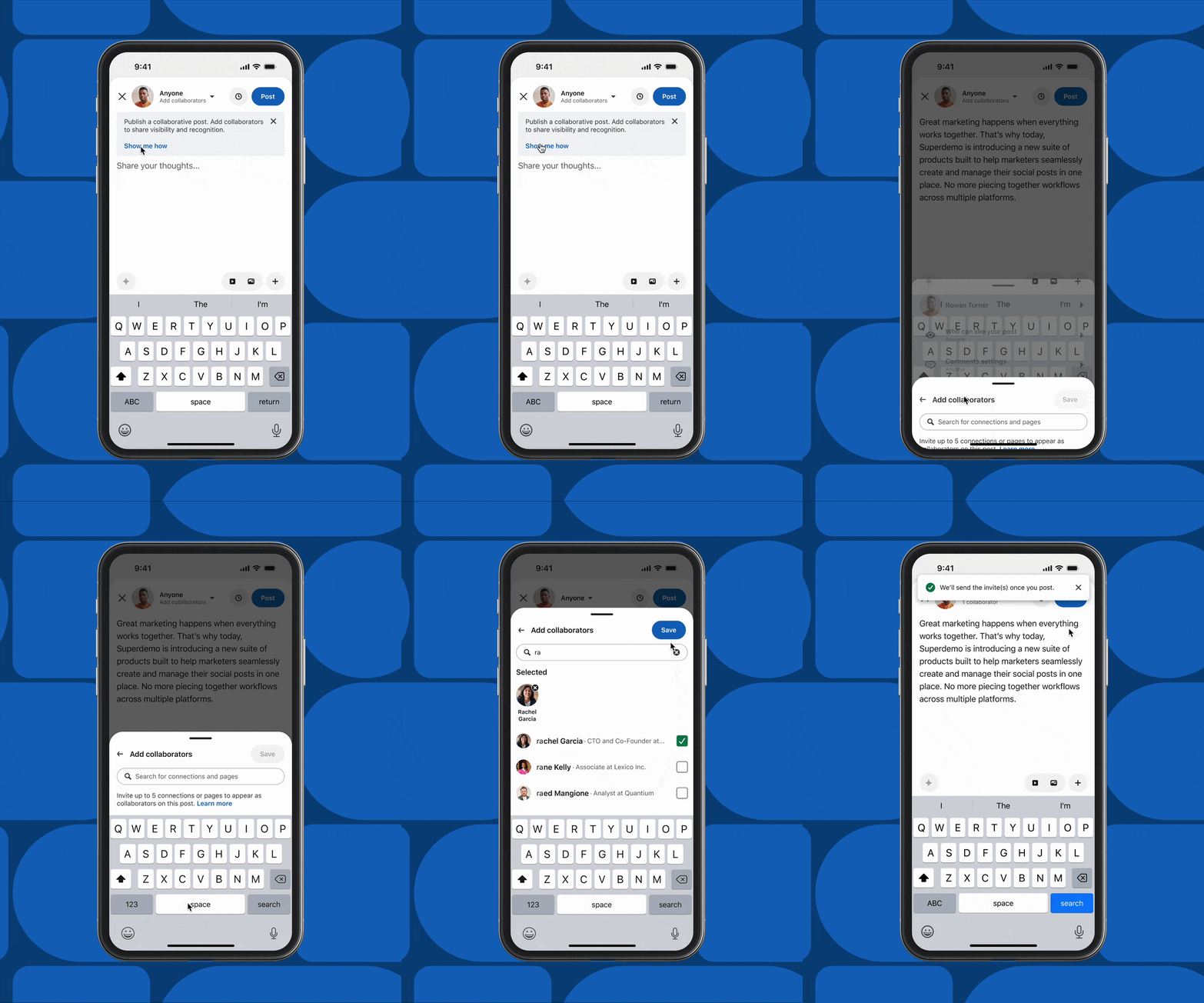
LinkedIn has officially confirmed that it is testing Collaborative Posts, allowing multiple members and LinkedIn Pages to co-author a single post.
Instead of relying on tags or mentions, collaborators will appear directly in the post header, making shared ownership immediately visible. The feature is initially being tested with selected creators and brands, with a broader rollout expected over the coming months.
Source: LinkedIn
The new format is particularly well suited for product launches, company announcements, partnerships, employer branding, and executive communications. A company can now publish alongside its CEO, a creator can post together with a brand, or a business can share a milestone with the employee who helped make it happen.
Beyond being a new publishing feature, Collaborative Posts reflect LinkedIn’s broader direction. The platform is increasingly recognizing that professional authority is often shared rather than individual, giving brands and people a native way to build credibility together instead of separately.
The Linked Blog is here to help you or your brand have the best possible LinkedIn presence, so feel free to contact us if you need help! See more about what we can do for you here.